Introduction
We’re Hasan and Bora from Civilizatio and we are here with Leo for today’s interview. Leo, could you please introduce yourself to our audience?
Leo:
Yes, I am Leo. I am from Germany, currently studying political science in Potsdam. I am happy to join you for this interview.
Hasan:
Thank you. Today, we’ll talk about the rise of the right in Germany and Europe. We’re interested in your personal views as a German. What do you think are the biggest problems facing Germany and the EU today?
Leo:
Of course, the rise of right-wing populist and far-right parties is a big problem for Germany and for Europe. Our value system is under great pressure. In many countries, such as Hungary, Italy or the Netherlands, popular discontent has already led to right-wing victories. In the near future, the main challenge for established parties will be to regain the trust of the public and offer voters convincing programs. Recently, of course, the focus has been on migration policy. Personally, I think we have far more pressing problems, but it is up to the voters to decide on political priorities.
Recent Elections
Bora:
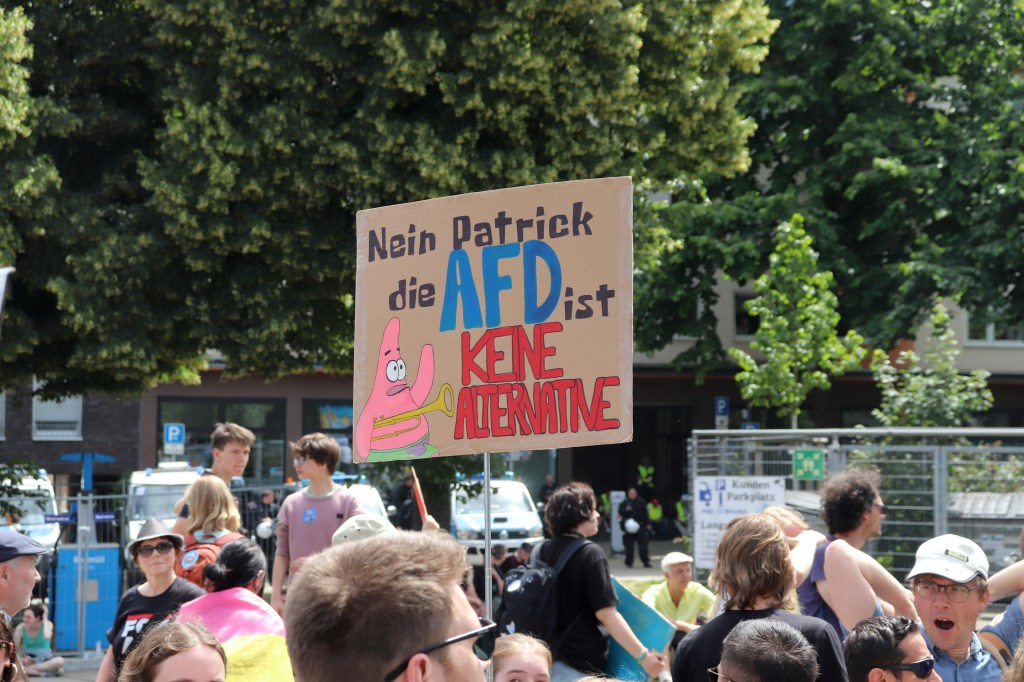
In this year’s election in Thuringia, the AfD (Alternative für Deutschland) won by a large margin. Does that concern you? Do you think this will be an example for other states?
Leo:
Yes, of course it concerns me. Especially when you consider that the Thuringian AfD represents the most extremist part of the party. The only good news at the moment is that the AfD is far from an absolute majority in all federal states. And as no one wants to form a coalition with them, they will probably not govern in the near future. Nevertheless, the good election result poses a major problem. The AfD’s success is forcing the other parties to form unstable coalitions in which there is less and less common ground, just to prevent them from governing. This could further damage the credibility of our political system. In the end, people’s frustration with dysfunctional governments could make them even more open to radical change, which in turn benefits the AfD. To answer your second question: I think this kind of frustration with our political system is more advanced in East Germany. The issues are the same in both parts of the country, but I believe that there are still more people in the West who fundamentally refuse to vote for AfD.
Hasan:
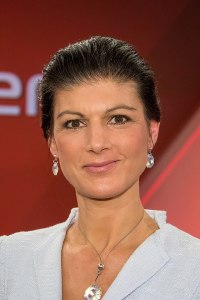
What about Sahra Wagenknecht’s party, the BSW? They’re also gaining traction with conservative policies, like anti-immigration, anti-green policies and anti-military aid to Ukraine. Are these policies gaining general support in Germany?
Leo:
The short answer is yes. The German society has become more conservative. I think that’s normal after the crises of recent years. Of course, the main issue here is the war between Russia and Ukraine, but the pandemic has also left its marks. The events have caused people to feel insecure, some are afraid, and the comparatively poor economic situation is making people think more about themselves.
And I think once again we have to differentiate between east and the west. We shouldn’t forget German Democratic Republic only ended roughly 30 years ago. Many people from our parents’ generation still have active memories of what it was like to live in a dictatorship in which tens of thousands of Red Army soldiers were stationed. I can imagine that this gives rise to a particular mixture of respect and fear for Russia and that people want to avoid provoking Russia at all costs. This is why military support for Ukraine is very unpopular in the East.
Coming back to the BSW, I think the label ‘conservative’ reveals a fundamental problem when trying to evaluate this party. In terms of economics, the BSW is more on the left. The same applies to a widespread anti-American and NATO-skeptical attitude within the party and its affinity with Russia. It should not be forgotten that Sahra Wagenknecht and many of her party colleagues come from the Left Party. In terms of social policy and culture however, the BSW tends to have more conservative viewpoints. In sum, they claim a policy for the common people and accuse the government, but above all the Greens, of making policy for an elitist urban minority. This dual role is new in Germany and perhaps also explains the fast rise of the party. It is extremely unusual for a newly founded party to get over 10% in its first election.
Hasan:
I want to just add a follow up to that. Why did she put her own name to the party? Like is it a common thing in German politics?
Leo:
No, absolutely not! She’s just a damn narcissist. She thinks she’s the most important person in the universe. That’s the only reason.
Hasan:
Yeah, that makes sense.
Bora:
Can you open more the East and West difference like is it only because of the economy or like are there any more underlying issues between them?
Leo:
Economic aspects continue to play an important role but are not enough to explain the differences. What is certain is that when looking at the absolute figures, it is noticeable that the eastern German states continue to lag behind the GDP, infrastructure or living standards of the western German states. However, if you look at the development of GDP, you can see that the eastern German states are also among the fastest growing ones. I would therefore assume that this difference is losing its significance.
What is more important in my opinion are the different experiences, especially with regard to change itself. The uncertainties and upheavals we are experiencing are causing many people problems. For many people in East Germany, however, this is not the first time that their future has seemed so uncertain. I am referring to the reunification. The name distracts from what actually happened: the German Democratic Republic ceased to exist and its territory and the people living in it were integrated into the political, economic and social structures of the Federal Republic of Germany. Of course, this meant that everything you knew was no longer worth much. Many people had to start from scratch and used the last 30 years to build a new life for themselves. West Germans have not experienced radical change like this in the last 75 years. Based on this, I would argue that many East Germans, who had to start from scratch after the last major transformation, have more reservations about new transformations.
Hasan:
Also, a surprising number of young people are voting for AfD. Why do you think this happens? Are the young people voting for the AfD because of the inequality of income. Or is there a social media effect?

Leo:
I think social media plays a significant role. You can now find every major German party on Tiktok and Instagram, but the AfD discovered their potential much earlier. They’re significantly more successful. If you consider how social media works, this unfortunately makes a lot of sense. The platforms want traffic and adjust their algorithms accordingly and apparently people respond best to provocation. I expect this mechanism to help populist parties to gain attention. And no party in Germany provokes as successfully as the AfD.
I would like to elaborate on two further arguments that could explain the AfD’s success among young voters. One is the protest vote. I believe it is normal for young people to want to change the status quo. And I think it’s normal for many to blame the government for the status quo. So if we assume that the three governing parties are a no-go, then only two major parties remain: the conservative CDU/CSU and the AfD. And Angela Merkel was chancellor for the CDU for 16 years before the traffic light coalition.
However, I would like to emphasize that I do not believe that young voters are only voting AfD out of protest or because they have spent too much time on Tiktok. I would therefore like to talk about the COVID-19 crisis. The state has spent a lot of money to mitigate the consequences of the pandemic for the population. It paid part of the salaries and provided companies with money to prevent them from going bankrupt. There were also various subsidies. But it is striking how little consideration was given to young people. They were particularly affected by the government’s restrictions due to their way of life and lack of financial reserves. For example, many students lost their jobs because, unlike normal employees, they are easily fired. I can well imagine that many who could not be supported by their families during these years had to drop out of their studies in order to finance themselves elsewhere. There are other examples. In schools, for example, the strictest measures were often imposed and maintained for the longest time. And this despite the fact that the young population is the least vulnerable to serious illnesses. Especially those who were between 15 and 18 years old at the time – and who may now be voting for the first time – were denied the usual milestones of growing up; school trips, proms, certificate ceremonies and trips abroad. And I believe this has unleashed extreme frustration, which the AfD knows how to instrumentalize. I would like to emphasize that they never offered a more sensible policy in this respect, but being against the system was and is one of their central narratives, and if someone associates such negative experiences with government action, then perhaps that is enough.

Bora:
Would you say Christian Democrats or liberals becoming more right, like are they trying catch the trend of rising far right parties. Or are they holding their ground?
Leo:
The Liberals have always had a smaller and different voter potential than the Conservatives. With just over 10% in the last election, they are very well represented at the moment. You could say they are trying to differentiate themselves more from their left-wing coalition partners, but I don’t think people are hoping for more right-wing content from the Liberal Party. In any case, their strategy doesn’t seem to be working. It is questionable whether they will still be in parliament after the next federal election.
As for the conservatives, we can say that they have moved further to the right since the last election, but this is more of a reversal of the Merkel era. Merkel was from the left wing of the CDU, not everyone in the party liked her policies, and the new party leader is more from the right wing and is using the opportunity to realign the party. You could also say that the CDU/CSU tried for a while to challenge the AfD on right-wing issues. But that didn’t really work, and I think the party now has a new narrative. Originally, they thought that the AfD would primarily challenge the left-wing parties and their content. That makes some sense, as the AfD blames the left-wing parties for almost everything bad in Germany. But I think they now realize that the AfD is trying to replace them as the main party on the right. That makes the AfD the biggest threat to the conservatives. And that is why I expect that in the coming years we will see a very sharp distinction and no attempts at closer cooperation or the anti-democratic behavior of the AfD.
Hasan:
Also, is the AfD really a far-right extremist party, or are they just enjoying the most comfortable position in politics, being in opposition and against everything, just judging everything without any intention of coming to power? Do you think they have a plan if they do come to power?
Leo:
Can’t you be both at the same time? You don’t need a plan to be far right. The narratives they use to discredit the other parties, and our political system follow a right-wing to far-right logic.
I don’t think the AfD has a plan for government participation, at least not one that tries to provide pragmatic answers to the complex problems of our time. What’s more, if, against all expectations, they win an absolute majority next year, the party leadership would already have problems filling parliament and ministries. For the sake of clarity, it should be mentioned that they are already co-governing in some municipalities, but these posts are strongly tied to the requirements of the federal states and the federal government. They are rather administrative posts.
In short, yes, the AfD is a protest party. But that does not mean that they do not bring extremist ideas into the political discourse or that they are not dangerous. If they came to power, they would at least try to restructure the political system in their favor, and corruption could increase massively – I’m thinking of Viktor Orban as a possible role model here. It could set Germany back decades.
Migration Issue and the Future of German Politics
Bora:
Can you feel any difference in daily life—like how people act around immigrants in campuses or workplaces? Is there a noticeable change?
Leo:
I don’t think so. There have always been people who had a more positive attitude towards immigrants and those who had a more negative attitude towards immigrants. Dealing with each other has perhaps become rougher overall, but this does not relate exclusively to the topic of migration.
Hasan:
Adding onto that, do people see the EU or the German government as responsible for the migration issue?
Leo:
I think that the responsibility is mainly seen as lying with the German government. Many people are aware of the great influence of German politics on the EU, so they are also held responsible if the people don’t like an EU law. The claim “the big countries decide over our heads” doesn’t work in Germany.
Bora:
When the far-right rises in a country, there’s often an increase in far-left politics too, but in Germany, there’s almost no far-left opposition. Why do you think that is?
Leo:
I believe that the political left is very divided. And because the German electoral system has a 5% threshold, we are not aware of possible radicalization. If all the smallest left-wing parties were to unite to form one radical left-wing party, who knows, maybe it would be enough. What is perhaps more important for answering the question, however, is that the polarization in Germany is not really between the left and the AfD. Rather, it is the Greens who are at the greatest possible contrast to the AfD. Radical left-wing parties in Germany are often characterized by anti-Americanism and pro-Russian sentiments, some of which are compatible with the AfD. There is no such overlap between the Greens and the AfD. To put it very simple, this is due to an urban-rural conflict in which other left-wing parties currently play only a minor role.
Hasan:
What do you think will happen in the upcoming 2025 elections? Who will win?
Leo:
I expect the Conservatives to win if they don’t make any big mistakes during the election campaign.
Hasan:
Will there be a coalition, or will they take power on their own?
Leo:
No, they won’t get 50%. Depending on the numbers, I expect Conservatives and the Greens to form a coalition.
Bora:
Do you think the General German populace has a hatred for immigrants? Or does the only people who have hatred for towards immigrants is far right and conservative people?
Leo:
That’s a very generalizing question. I don’t think it’s possible to make such a statement about 84 million people. There are certainly quite a few people who don’t like immigrants, also for racist reasons. But I don’t believe that this applies to the majority of the population.
Bora:
Is the far-right mostly against newcomers like Ukrainians and Syrians, or are they also against Turks who have been in Germany for decades?
Leo:
These are three very different cases that need to be differentiated. What bothers the far-right above all is the acceptance of asylum seekers. I would leave Turks out of the equation for the time being because they don’t usually come to Germany as asylum seekers. A distinction is made between Syrians and Ukrainians for cultural reasons. Ukrainians are perceived as Europeans, they don’t stand out visually, they even share the same religion. Above all, however, people are familiar with the situation in Ukraine and can therefore perhaps better understand the need to leave. None of this applies to the Syrians, even though they naturally had very good reasons to leave their country. But you have to know that first. If you happen to ask someone today about the situation in Syria, you probably won’t get a good answer. There is little discussion about other forms of migration, including labor migration, through which most Turks have also come to Germany. Like all Western countries, German society is ageing and is dependent on labor migration to compensate. Nevertheless, when in doubt, a racist only needs a darker skin color to label someone. And then it doesn’t matter whether you are perhaps a third-generation German citizen or a refugee.
Hasan:
How do you see the future of Germany and the EU? Do you think Germany will stay aligned with the EU, or could there be changes? What do the people think about the EU identity opposed to the German identity?
Leo:

I think that the institutions of the European Union as they function today are no longer capable of moderating the different demands and world views of its member states in a satisfactory manner. Many negotiation processes take far too long and are too often led ad absurdum by vetoes. Consequently, the EU would have to be reformed in one way or another. To simplify decision-making processes, the sovereignty of the member states would have to be limited further, for example by replacing unanimity with simpler majorities. Alternatively, integration could be rolled back until a consensus is re-established on the issues for which the EU should be responsible.
I find it extremely difficult to predict the direction in which the EU will develop over the next few years. I hope there won’t be any downsizing, but more integration at the expense of member states’ sovereignty is also very unlikely in the foreseeable future. The only thing that seems certain to me is that the EU will continue to change. But I am even more certain that the fate of Germany and the EU will remain linked. Although membership is controversial in some countries, this kind of fundamental criticism can hardly be applied to Germany. Where (radical) parties have tried to question this close tie, they have always been punished by the voters. I expect and hope that this will continue.
As far as European identity is concerned, I do not believe that it is in competition with German identity. Perhaps it’s a bit like dual citizenship. Certainly, a large majority of the population still identifies as German at the moment. But the European identity is growing in parallel. People feel a certain affinity with people from other member states. Ultimately, the EU sums it up best with its own motto: It is united in diversity.


 Civilizatio
Leave a comment