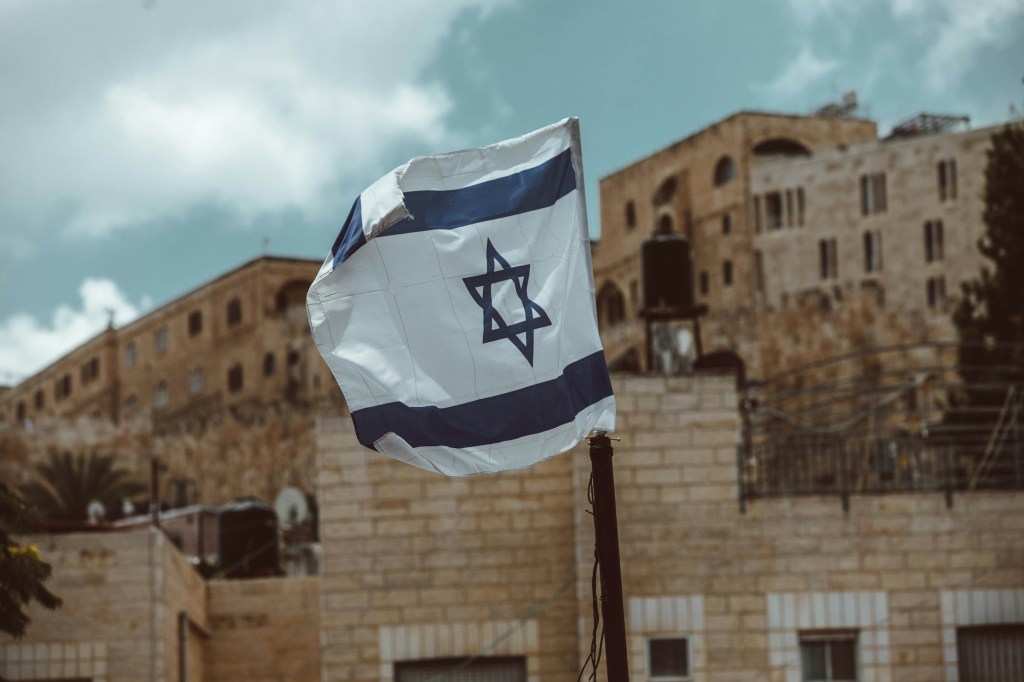
*We will refer to our friend as David and hide his real name as it is his wish to stay anonymous
Civilizatio Team
Introduction
Hasan:
Can you introduce yourself for us?
David:
Sure. I’m David* a psychology student in the humanities department currently studying in Europe. I enjoy traveling—I try to visit different countries every couple of weeks.
Hasan:
Thank you. Were you born in Israel? How long have you lived there?
David:
Yes, I was born in Israel, near Tel Aviv, and I’ve spent most of my life there.
Life as an Israeli
Bora:
Can you talk about your life in Israel? How was it?
David:
Life in Israel is generally good, but it can also be complicated because of the political situation. Historically, the land is contested by different groups, which makes compromise difficult. It’s challenging to keep everyone happy, and conflicts sometimes arise. Despite these challenges, I think it’s a great place. My family and friends are there, and everything feels close-knit.
Hasan:
Now that you’re in Europe, how is life different for an Israeli?
David:
It’s very different. In Europe, you can take a train or bus and be in another country within hours. In Israel, traveling abroad usually requires a flight, which makes it more complicated. Environmentally, I think it’s better to have options for closer travel without contributing as much to carbon emissions.
Hasan:
Have you experienced any backlash or differing treatment in Europe because of your Israeli nationality?
David:
Occasionally, but it’s rare. Some people have strong opinions about the political situation and pick sides, but most people are respectful. Not everyone needs to be friends, but overall, my interactions have been fine.
Bora:
Do you think anti-Semitism has been on the rise in Europe?
David:
Unfortunately, yes. For example, last week in Greece, I didn’t face direct discrimination, but I saw graffiti with anti-Semitic messages. There’s a fine line between supporting a cause like Palestine and crossing into hate speech. The recent attack on Jewish people in Amsterdam is a clearer example of anti-Semitism.
Sky:
How are your relations with Palestinians abroad? Have you interacted with them?
David:
I haven’t had many interactions. Once, I met someone who was Palestinian, and it was a positive experience. I try not to provoke or judge anyone. I’m not very vocal about my identity, which might minimize conflicts.
Sky:
Do you identify more with your Israeli or Jewish identity? Are they distinct for you?
David:
It’s complex. In Israel, being Jewish is tied to both religion and nationality. Personally, I feel more Israeli because I’m not very religious.
Bora:
What do you think about the Law of Return, allowing Jewish people to gain Israeli citizenship?
David:
I think it makes sense for every nation to offer a safe space for its people. It’s not unique to Israel; other nations have similar policies for their diaspora.
Bora:
Should Palestinians displaced by the Nakba be allowed to return to their homeland?
David:
I’m not well-versed in all the historical details, but I do believe Palestinians deserve their own country. The solution is very complicated, though.
Hasan:
There’s a perception that Jewish communities abroad comes together to help each other out and support Israeli policies within that country. Have you ever observed this when you are abroad?
David:
In many cities, there are Jewish community centers, like the House of Chabad, where people can connect and support each other. These are more about cultural and religious community than political advocacy.
Sky:
What do you think about the polarization between Muslims and Jews?
David:
I think the division is more political and racial than religious. The religions themselves have many similarities. The polarization stems from broader political tensions rather than theological differences.
Conflict From an Israeli Perspective
Hasan:
Let’s talk about the Israel-Palestine conflict. What are your thoughts on the current situation, especially after the October 7 attacks and Israel’s operations?
David:
It’s a tragedy on both sides. Every country has the right to defend itself, but I also understand why Palestinians act as they do, given their lack of a state. The conflict is about two groups wanting the same land, which makes it incredibly hard to resolve. Even if the war ends, the conflict may persist.
Sky:
How do you view the international community’s stance on the conflict? For example, the U.S., Iran, or Turkey?
David:
Governments and citizens often have different opinions. For example, while the Turkish government might not always be supportive of Israel, Turkish people I’ve met have been kind. Similarly, U.S. policy changes with each administration. It’s a complex web of interests.
Bora:
Do you think Israeli youth are more opposed to war than older generations? Are they more progressive?
David:
I think younger people are more idealistic, but they’re also pragmatic. The October 7 attacks reminded us that sometimes war chooses you, not the other way around. To maintain boundaries, strength is necessary, but the younger generation does seem to seek peaceful solutions.
Hasan:
Growing up in Israel, where conflict is constant, do you think these operations are essential for Israel’s survival?
David:
It’s not black-and-white. At the moment, I don’t feel Israel’s survival is directly threatened, but showing strength is crucial to deter potential threats. It’s a delicate balance.
Bora:
What are your thoughts on the current political climate in Israel?
David:
Honestly, I don’t follow it closely enough to give an informed opinion.
Sky:
What about Hamas? What do you think of their role in the conflict?
David:
I think Hamas is problematic. A lot of international aid meant for Palestinians ends up funding their military activities or lining pockets instead of improving lives. This corruption exacerbates the suffering in Gaza.
Sky:
Do Gaza and the West Bank represent the same Palestinian community to you?
David:
To me, they seem similar, but I admit my understanding is limited.
Bora:
How about Israeli Arabs? Do you have any friends or acquaintances who are Israeli Arabs?
David:
I’ve had positive interactions with some at the university, but I don’t know them very well. There’s no animosity, though.
Hasan:
What’s your opinion of Prime Minister Netanyahu? Do you think he represents the general population?
David:
I’m not a fan of Netanyahu. He’s a divisive figure, and while he’s seen as a representative of Jewish people, he’s also heavily criticized, sometimes unfairly.
Sky:
What do you think about Zionism as an ideology?
David:
Zionism has evolved. Initially, it was about establishing a homeland for Jewish people. Today, it’s more about maintaining that home, but perspectives vary.
Bora:
What’s your take on the Israeli settlements in the West Bank?
David:
I’m not knowledgeable enough to have a strong opinion on the settlements. It’s a complex issue.
Bora:
What about the boycott movement against Israel?
David:
I think many people involved have good intentions, but the movement can sometimes escalate and harm innocent individuals. It’s a tricky issue.
Hasan:
Finally, what do you think about the future of Israel and this conflict? What awaits the new generation?
David:
I believe a two-state solution is the only viable path, but I don’t see it happening soon. Both sides need to be satisfied, which seems unlikely. The conflict might continue for a long time. I hope for peace, but I’m not optimistic.
Hasan:
Thank you for your responses, that’s all for today’s interview.
—————————————————————————————————
We hope you enjoy our interviews! If you’d like to share your thoughts or participate in a discussion about a topic you believe deserves more attention, feel free to reach out to us through the link below.



 Civilizatio
Leave a comment